Every year on May 23, World Turtle Day puts a global spotlight on the seven species of sea turtle and the freshwater turtles and tortoises that share our planet. In 2026, the message is harder to ignore: six of those seven sea turtle species are listed as threatened or endangered, and plastic pollution has become one of the most relentless pressures on their survival. The good news is that the most effective response is also the simplest. Beach by beach, bag by bag, communities around the world are taking that response into their own hands.
What is World Turtle Day?
World Turtle Day was founded in 2000 by American Tortoise Rescue, a US-based non-profit dedicated to the protection of turtles and tortoises. The date, May 23, was chosen to drive awareness, education, and action for these species and the ecosystems they depend on.
More than two decades later, the day is observed in dozens of countries through beach cleanups, school programs, fundraisers, and conservation drives. The goal is straightforward: make sure the world’s oldest reptile lineage, a group that shared the planet with dinosaurs and outlasted them, is still thriving a century from now.
Why sea turtles are facing a plastic crisis
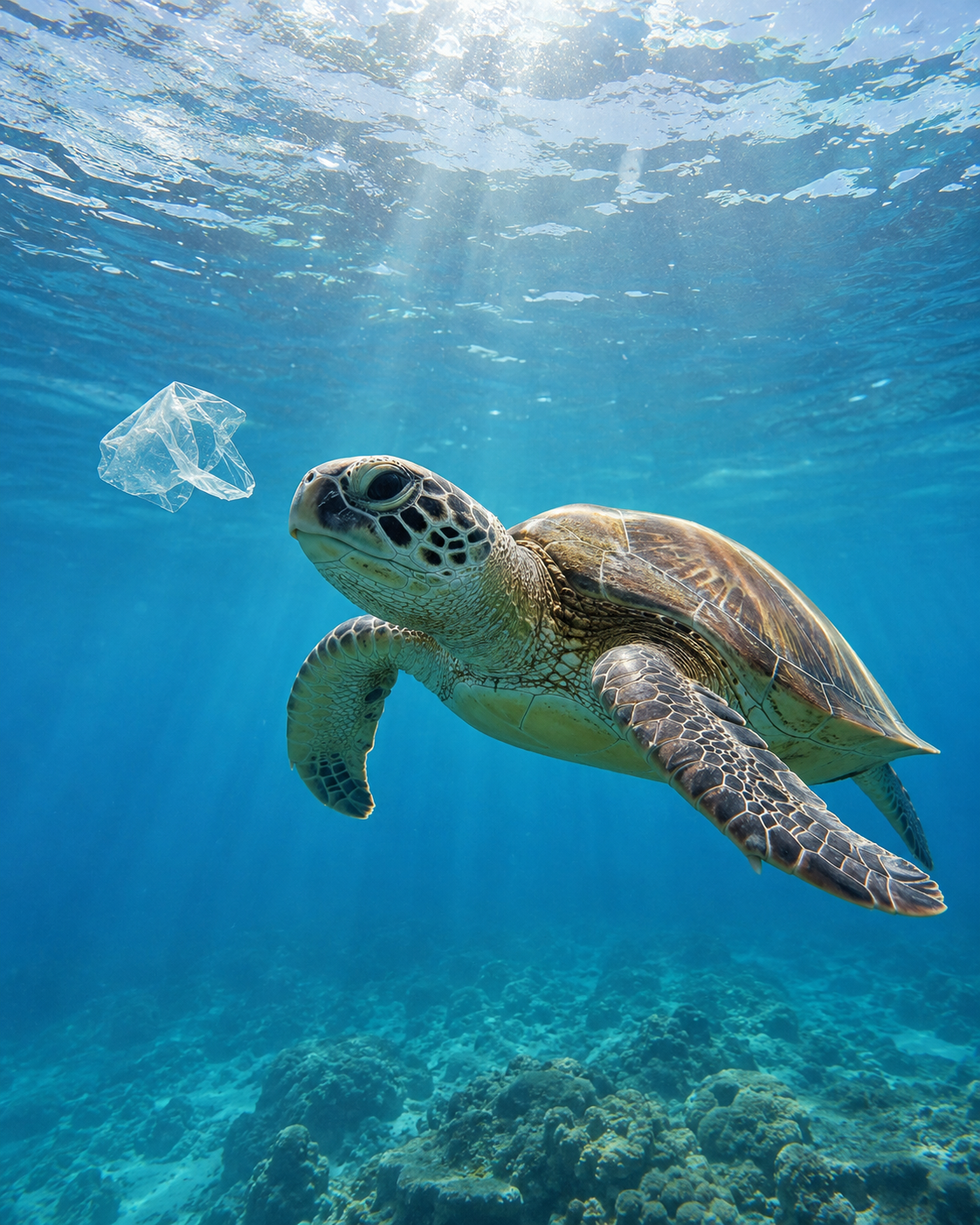
Plastic is one of the top threats to marine turtles, alongside fishing bycatch, climate change, and habitat loss. According to the IUCN Red List, six of the seven sea turtle species are classified as threatened: leatherback, loggerhead, green, hawksbill, olive ridley, and Kemp’s ridley. The seventh, the flatback, is data deficient but faces similar pressures.
The way plastic harms turtles is brutally simple:
- Ingestion. Floating plastic bags closely resemble jellyfish, a primary food for leatherbacks. Once swallowed, plastic blocks digestion and can cause starvation.
- Entanglement. Discarded fishing gear, six-pack rings, and nylon rope wrap around flippers and necks, leading to drowning, infection, and amputation.
- Microplastic accumulation. Tiny plastic fragments enter the food chain through prey species and accumulate in turtle tissue over a lifetime.
- Beach debris. Litter on nesting beaches blocks hatchlings from reaching the sea, dramatically reducing survival rates at the most fragile stage of life.
Each of these threats is preventable. Each is reduced every time a beach is cleaned, every time abandoned fishing gear is reclaimed, every time a single-use plastic item stays out of a coastline.
The wider picture: plastic and marine ecosystems
Sea turtles are sentinel species: when they decline, it signals deeper problems for entire marine ecosystems. The NOAA Marine Debris Program has documented plastic pollution from shallow coral reefs to the deepest ocean trenches.
The damage is not abstract. Plastic in the ocean breaks down into microplastics, enters fish and shellfish, and ends up on dinner plates around the world. Plastic on beaches degrades the coastal habitats that turtles, seabirds, and millions of human beach-goers share. The full impact of plastic stretches from the smallest plankton to the largest whales, and it does not stop at species boundaries.
How cleanups directly protect sea turtles
Every plastic bag pulled off a beach is one that cannot wrap around a flipper. Every cigarette butt removed from sand is one that cannot poison a hatchling or leach toxins into nesting sites. Beach and coastal cleanups are among the most direct, measurable actions any community can take for marine life.
This matters at scale. Across the CSFN community, more than 8,100 cleanups have been logged in 84 countries, removing over 910,000 kilograms of litter and more than 7.9 million litres of waste. The benefits of picking up litter reach further than the bag in your hand: cleaner beaches mean safer nesting, healthier hatchlings, and less plastic entering the food web. They also restore the experience of the coast for everyone, humans included.
5 ways to mark World Turtle Day 2026
- Run a beach or coastal cleanup. Solo, with friends, or with your team. Even thirty minutes makes a measurable dent.
- Log your cleanup in the CSFN app. Your kilograms join a global count and your effort is visible to others. Get the CSFN litter picking app on iOS or Android.
- Cut single-use plastic for a day. Pick one habit: refillable water bottle, no plastic bags at the supermarket, no plastic straws. One day becomes a week, becomes the new normal.
- Support a turtle conservation organization. American Tortoise Rescue, the founders of World Turtle Day, is one option. Local sea turtle hospitals and nesting protection programs exist across most coastal countries.
- Share what you learn. Post your cleanup, tag #WorldTurtleDay, talk about it at work. Awareness compounds.
Key takeaways
- World Turtle Day, May 23, was founded in 2000 to protect turtles, tortoises, and their habitats.
- Six of seven sea turtle species are classified as threatened or endangered.
- Plastic harms turtles through ingestion, entanglement, microplastic accumulation, and beach debris.
- Beach and coastal cleanups directly reduce these threats.
- Logging cleanups in the CSFN app turns individual action into a global, visible movement.
Pick a beach, pick a bag, change a turtle’s day
The best way to honour World Turtle Day is the simplest one: spend an hour cleaning a beach, a riverbank, or any coastline near you. Log it in the CSFN app and you join cleanups across 84 countries, all working toward fewer threats in the water and more sea turtles in the next generation. Download the app on iOS or Android and start tracking your impact today.