Spogomi is a Japanese cleanup format where teams of three work to collect the most litter, sorted correctly, within a fixed time on a defined route. The name fuses “supotsu” (sport) and “gomi” (rubbish). It started in Tokyo in 2008, ran quietly for fifteen years, then jumped onto the global stage with the first Spogomi World Cup in 2023. This post covers where it came from, how it actually works and where the movement has spread.
Where Spogomi came from
The format was created by Kenichi Mamitsuka, a Japanese businessman who wanted a way to make street cleanups feel like a team sport rather than a chore. He set up the Japan Spogomi Association (Nippon Spogomi Kyokai) in 2008. The early years were small: school groups, neighbourhood teams, occasional company events. The format suited Japanese cities well, where street cleanliness is already a cultural value and collective activity is more comfortable than individual virtue.
By 2015 the Association was running national results tables. By 2019 corporate sponsorship started to scale. The breakthrough came in November 2023 with the inaugural Spogomi World Cup in Tokyo, organised under the patronage of the Japanese Ministry of the Environment and with 21 national teams taking part.
How a Spogomi event works
Three things define the format: small teams, a fixed route and scoring on weight plus category.
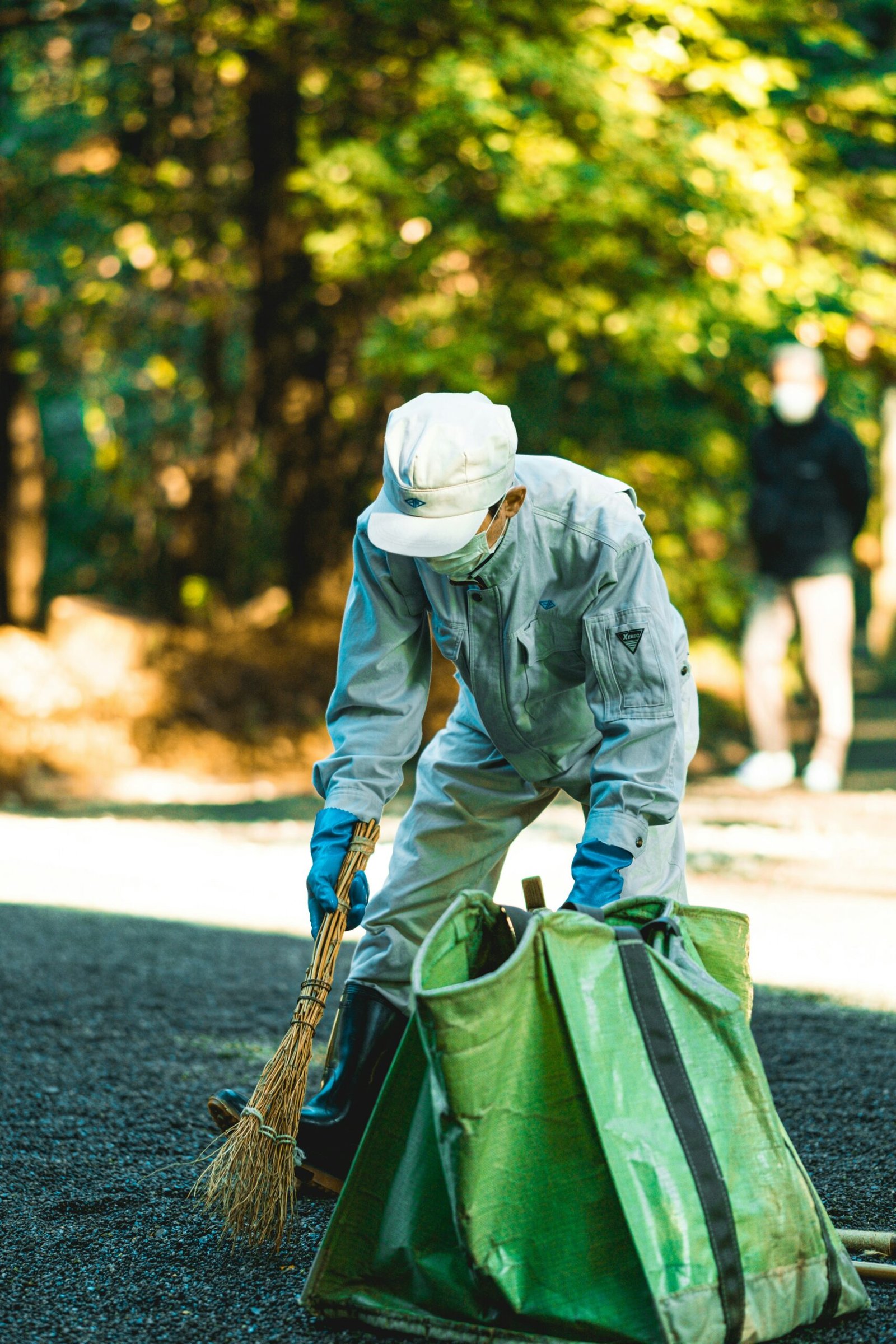
Team of three. Each team has exactly three members. They wear matching vests and use the same equipment: a pair of tongs, gloves and several bags for sorted categories.
Sixty minutes on a defined route. The route is set by the organiser, usually around 3 to 5 kilometres of urban streets. Teams must stay within it. The clock runs.
Scoring is by weight and category. At the end, each team hands in its sorted bags. Different categories of trash carry different point multipliers, with cigarette butts typically worth the most per gram because they are the smallest and most numerous. Sorting errors lose points. Total score is weight times multiplier minus penalties.
The result is a format that rewards observation (noticing the small stuff), sorting skill (knowing what goes where) and teamwork (covering ground efficiently).
Why the format works
Spogomi solves the same problem that gamification solves elsewhere: it makes a repeated useful activity into something people want to do again. The team-sport framing also removes the moralising that sometimes hangs around environmental action. There is no lecture, no eco-purity order. There is a stopwatch and a scale.
For groups that find traditional cleanups too earnest or too unstructured, the Spogomi format offers a comfortable middle ground. The structure is light enough to organise in a weekend and the rules are simple enough to explain in two minutes.
The 2023 and 2025 World Cups
The first Spogomi World Cup in Tokyo in November 2023 brought together teams from 21 countries: from Australia and Brazil to the UK, Indonesia and Nigeria. The team representing the UK finished first. The second edition followed in 2025, also held in Tokyo, with more national qualifying rounds in the lead-up. The Japanese Ministry of the Environment positions Spogomi as a soft-power export, similar to how karate, ikebana or anime have travelled abroad.
National federations now exist in over thirty countries. Most run regional qualifying events to send teams to the World Cup. Some have started national results tables of their own.
Spogomi in Europe
European involvement has grown fastest in the UK, France, Spain and Germany. The UK qualifier in 2025 was held in Brighton. Spain organises events in Madrid and Barcelona. France runs sessions in Paris and along Mediterranean beaches.
For organisers in Luxembourg and the rest of the EU, the format adapts well to corporate teambuilding (small teams, fixed time slot, measurable result) and to school groups (clear rules, sortable scoring, no equipment lock-in). The materials list is short: tongs, gloves, bags, a scale and a measured route.
How to run a Spogomi-style event yourself
You do not need an affiliation to run a local Spogomi-style cleanup. The format is open. A working setup:
- Pick a route of 3 to 5 kilometres, ideally urban with mixed surfaces.
- Form teams of three. Provide each team with tongs, gloves and three colour-coded bags: cans and bottles, cigarette butts and other.
- Set the clock to 60 minutes.
- At the end, weigh each bag. Score with simple multipliers: cans and bottles ×1, cigarette butts ×3, other ×1. Subtract a small penalty for sorting errors.
- Announce the order, photograph the haul and disperse the sorted bags to the right recycling streams.
The total trash collected in an hour by ten teams of three usually surprises people. A typical session in a moderately littered urban area can produce 20 to 50 kilograms of sorted waste.
Logging the result
The post-event weight and photos matter as much as the score. They turn a Saturday outing into a piece of citizen data. Logging the cleanup in an app that the rest of the community is using puts the result in a wider context. The CSFN litter picking app works for that: each cleanup gets a weight, photos and a location. You also see other cleanups around the world building up the same picture.
If you want to read more on global cleanup formats and how they connect, the benefits of picking up litter page covers the broader case.