The plastic bottle you drank from this morning took about three seconds to open and roughly fifteen minutes to empty. It then began a journey that may last 450 years. Most of that journey is invisible to whoever drank from it. This post follows a single bottle from oil to ocean and looks at where the cycle actually breaks.
Where it starts: crude oil, ethylene, PET
A standard water bottle is made of polyethylene terephthalate, known as PET. PET is produced from fossil hydrocarbons, mainly crude oil and natural gas. The pipeline from oil rig to finished bottle is energy-intensive: extraction, refining, polymerisation, moulding, transport. By the time a single 500ml bottle reaches a store shelf, it has already used roughly seven times its own weight in fossil resources.
This is the lifecycle stage that gets the least attention from consumers. It also accounts for most of the bottle’s carbon footprint.
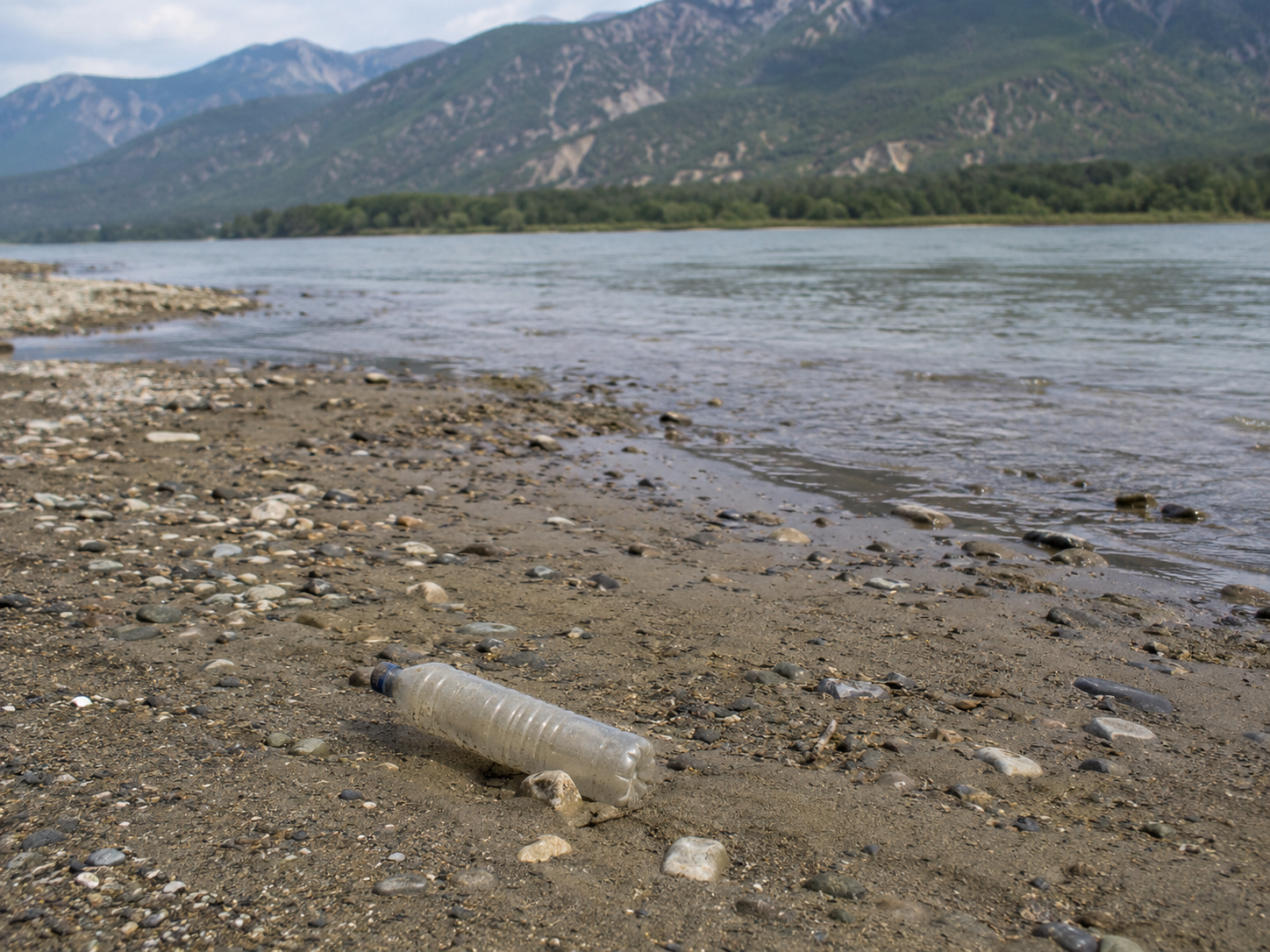
Use: an average of 15 minutes
The bottle’s useful life is short. Single-use means exactly that. The average plastic water bottle is used and discarded within an hour of purchase. The disconnect between effort to produce and length of use is the defining absurdity of single-use packaging.
Disposal: four possible paths
Once empty, the bottle takes one of four paths. The shares vary by country, but the global picture has been roughly stable for years:
1. Recycled. Less than 10% of all plastic ever produced has been recycled. For PET bottles specifically, rates are better in some countries (over 70% in deposit-return systems), much worse in others. Even when recycled, PET typically downgrades each cycle, eventually ending up in textiles or carpets that themselves can’t be recycled.
2. Incinerated. Burnt for energy. Reduces volume but releases CO2 and, depending on the facility, other pollutants.
3. Landfilled. Buried, where it slowly degrades over centuries.
4. Leaked into the environment. Dropped on a street, blown out of an open bin, washed off a beach. The bottles that begin the journey covered in the rest of this post.
The river-to-ocean route
A bottle that escapes the waste system rarely stays where it was dropped. Rain moves it. Wind moves it. A bottle on a street drains into a storm sewer, then a stream, then a river, then a larger river, then the sea. Peer-reviewed estimates put the share of ocean plastic coming from land-based sources at roughly 80%, with rivers as the primary transport route.
A bottle dropped in central Luxembourg can reach the Moselle, the Rhine and finally the North Sea in a matter of weeks if the weather cooperates. In other parts of Europe, the Danube, the Po and the Rhône do the same downstream work. Globally, a handful of major rivers (the Yangtze, the Ganges, the Niger, the Nile) carry the bulk of the world’s river-borne plastic, but every river contributes.
In the ocean: drift, breakdown, microplastic
Once at sea, a PET bottle floats. Currents pull it into one of five main ocean gyres. The Great Pacific Garbage Patch, the most famous, holds an estimated 80000 tonnes of plastic in an area three times the size of France. The other four gyres (North Atlantic, South Pacific, South Atlantic, Indian Ocean) hold their own accumulating volumes.
The bottle does not biodegrade. It fragments. UV light, wave action and abrasion break it into smaller and smaller pieces. After a few decades it is no longer a recognisable bottle: it is thousands of microplastic particles. Those particles enter the food chain. They are now present in human blood, breast milk, placentas and most of the seafood we eat. The science on long-term health effects is still emerging.
Full decomposition of PET in the marine environment is estimated at around 450 years. The bottle that fell out of a bin in 2026 will, in some form, still be around in 2476.
Where the cycle actually breaks
Three points in the lifecycle are realistic intervention targets:
Don’t produce it in the first place. Refill at home or at a public tap. Carry a reusable bottle. The most effective bottle is the one that was never made.
Capture it before it leaves the waste system. Deposit-return schemes are the single most effective policy lever yet identified. Norway recycles 97% of its PET bottles thanks to a deposit scheme. The EU is rolling out similar systems country by country under the Single-Use Plastics Directive.
Pick it up after it has leaked. Cleanups are the last-line intervention. They work, especially when the kilograms collected are logged and mapped. CSFN’s community has registered more than 8100 cleanups and removed over 915000 kilograms of litter from rivers, forests, beaches and streets across 84 countries. Every kilogram pulled out of a riverbank is a kilogram that doesn’t reach a gyre.
Key takeaways
- A plastic water bottle takes minutes to use and around 450 years to fully decompose in the marine environment.
- Less than 10% of all plastic produced has ever been recycled.
- Roughly 80% of ocean plastic comes from land, mostly via rivers.
- The most effective interventions are upstream: refill instead of buying, deposit-return systems, then cleanups as the last line.
Do something concrete this week
Carry a refillable bottle for a week. Log a 30-minute cleanup in your neighbourhood using the CSFN app. Both actions cost nothing and both, repeated, make a measurable difference.